Sat,25 May 2024
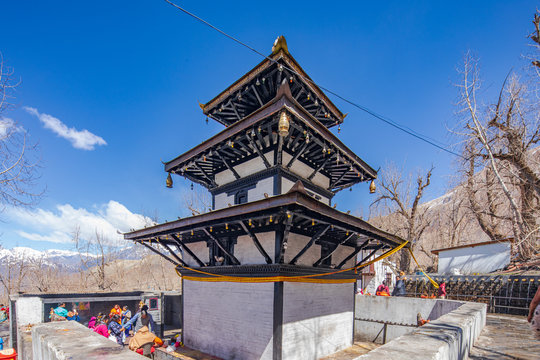
Muktinath, translating to "Lord of Salvation" in Sanskrit, is a testament to the rich tapestry of religious harmony in Nepal. For Hindus, it is one of the 108 Divya Desams, or holy abodes of Lord Vishnu. According to Hindu mythology, it is here that Lord Vishnu was freed from the curse of the sage Brinda, hence the name 'Muktinath', which signifies liberation. Buddhists revere the temple as Chumig Gyatsa, meaning 'Hundred Waters' in Tibetan, a place where the great sage Padmasambhava meditated and attained enlightenment.
Perched at an altitude of 3,710 meters (12,172 feet), the temple's architecture is a fusion of pagoda-style structures and Tibetan influences. The main shrine, a small pagoda-style temple, houses a golden statue of Vishnu, known locally as Shri Mukti Narayan. The temple complex also features 108 brass water spouts, shaped like bull heads, from which icy cold water flows continuously. Devotees believe that a ritual bath under these spouts purifies the soul and brings salvation.
Reaching Muktinath is an adventure in itself, filled with breathtaking landscapes and spiritual encounters. The journey typically begins in Kathmandu, with travelers flying to Pokhara and then either taking a flight to Jomsom or embarking on a trekking expedition through the Annapurna Circuit. The final leg involves a scenic hike or a jeep ride through the rugged terrain, offering glimpses of deep gorges, towering peaks, and serene river valleys.

Pilgrims visiting Muktinath often describe their experience as profoundly transformative. The temple’s serene ambiance, coupled with the awe-inspiring backdrop of the snow-capped Himalayas, creates a setting that encourages introspection and spiritual rejuvenation. Rituals include bathing in the sacred water spouts, performing prayers at the temple, and offering respects at the nearby Jwala Mai Temple, where eternal flames fueled by natural gas jets emanate from the ground.
Muktinath is not only a spiritual haven but also a symbol of environmental and cultural harmony. The local communities, predominantly Thakali and Tibetan ethnic groups, uphold traditions that emphasize living in balance with nature. Their hospitality, combined with the region's pristine beauty, enriches the pilgrimage experience, making it both a spiritual and cultural journey.
Muktinath Temple, with its profound religious significance, awe-inspiring natural setting, and cultural richness, offers a unique blend of spirituality and adventure. Whether you are seeking spiritual solace, a connection with nature, or a glimpse into the vibrant cultural heritage of Nepal, Muktinath promises an unforgettable experience. This sacred sanctuary in the Himalayas continues to inspire and transform the lives of those who undertake the pilgrimage, reminding us of the timeless quest for liberation and peace.
Sat,25 May 2024
Sat,25 May 2024
Sat,9 November 2024